Implementing Humanoid Robotics successfully
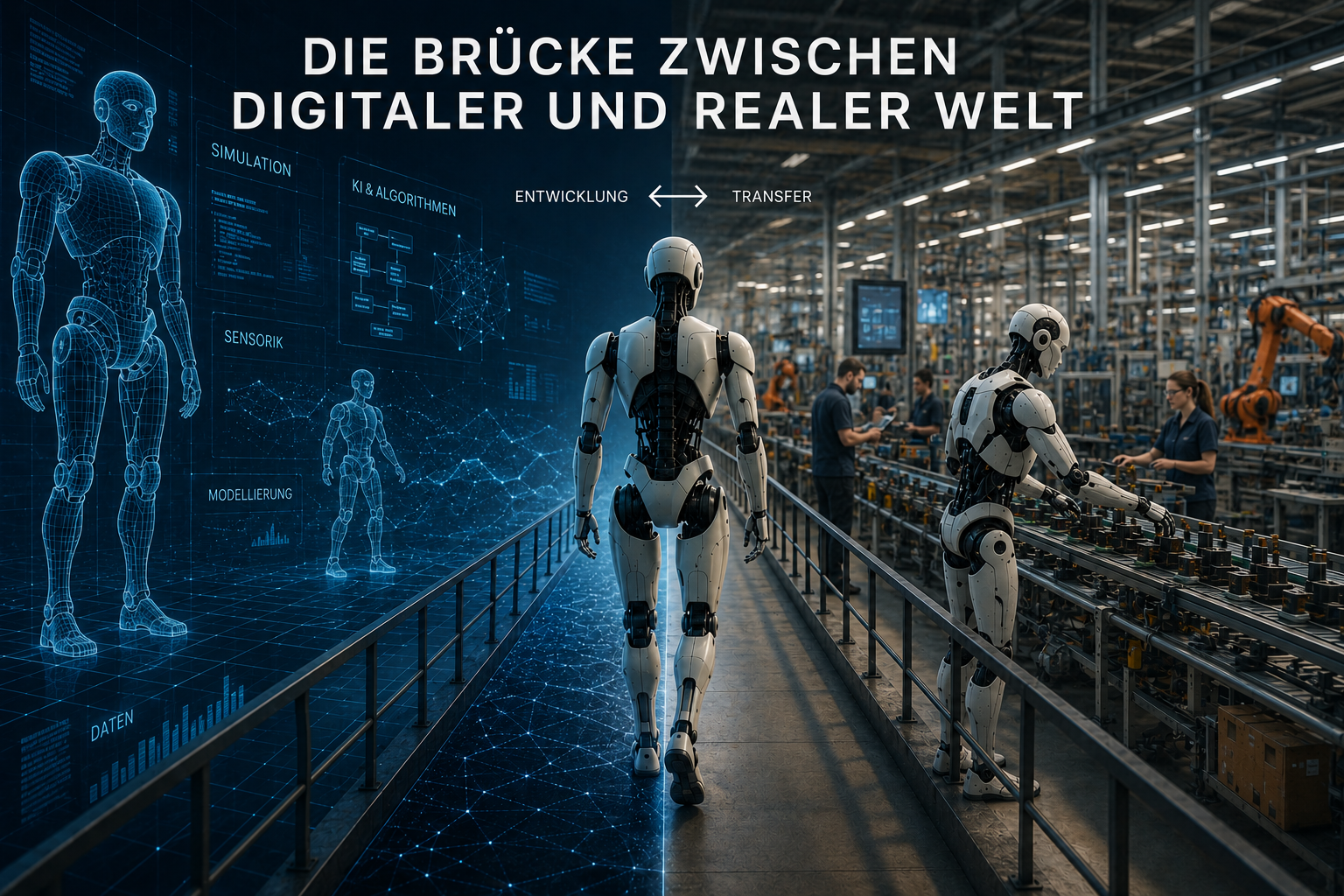
With humanoid robotics, we bridge the gap between the digital and physical worlds for you. From strategy to scalable operations, we provide comprehensive support to companies in implementing embodied AI—technically, regulatorily, and organizationally.
Start implementing humanoid robotics today.
Why using Humanoid Robotics is worth it
Humanoid robots have reached a critical level of maturity: they are versatile, economically viable, and already capable of reliably performing a variety of tasks in real-world operations. Their capabilities have long since gone beyond traditional automation: humanoid robots are already carrying out security patrols, building inspections, and environmental monitoring.
At the same time, new fields of application are emerging—from the safe handling of hazardous substances to the filling and unloading of equipment or collaborative work with humans.

Provide relief for skilled workers
Humanoid robots take on physically demanding tasks as well as work involving hazardous substances or in challenging environments. This frees up time for value-added tasks

Increase productivity
Automate repetitive and time-consuming tasks with humanoid robots—and achieve higher throughput while maintaining consistently high quality
AI Automation within existing environments
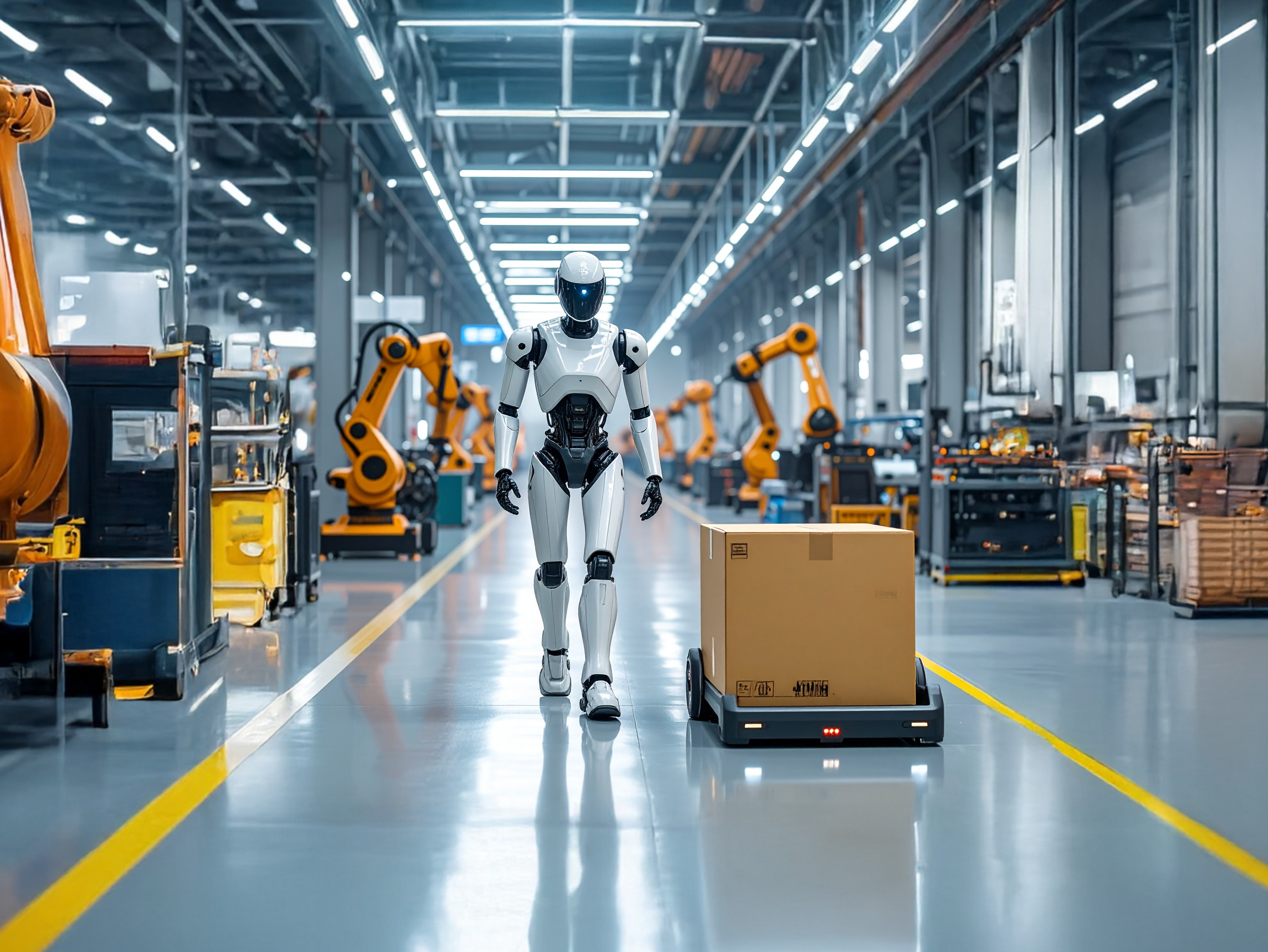
Humanoid robotics can be integrated into your existing environment—without having to build new factories, modify equipment, or completely overhaul processes
Seize opportunities – Master complexity
Humanoid robotics offers enormous potential. At the same time, companies face three key challenges: the technology is complex, the regulatory framework is fragmented, and the workforce must be engaged.
In practice, this raises specific questions:
- Which technology is the right one?
- Where is it truly worth deploying?
- How do I integrate humanoid robots into existing systems and processes?
- What does the EU AI Act mean for me specifically?
- How do I get my employees on board?
As an independent partner, we work with you to clarify these questions and guide you from the initial idea through to the successful implementation of humanoid robotics.
Our Services
Technology. Data. Regulation. People.
We combine technical deployment expertise with in-depth knowledge of data and AI architectures, regulatory expertise, and professional change management. This ensures that humanoid robotics not only works technically for your organization but also complies with regulatory requirements, is accepted by your employees, provides them with long-term relief, and delivers measurable business impact.
Strategy & Vision
Clear objectives, prioritized use cases, and a solid basis for decision-making
Before selecting a technology, we clarify objectives, areas of application, and organizational requirements.
Vision Workshop – Clearly defining what is to be achieved through the use of humanoid robots
Use Case Identification & Prioritization – Application scenarios and systematic evaluation based on business impact, technical feasibility, and organizational readiness
Operating Model Design – How should robot operations be organized? Definition of roles and responsibilities
Robotics Roadmap – Prioritized entry with a pilot use case, including a scaling path and investment planning
Stakeholder Alignment – Involvement of management, the works council, IT, production, and HR to ensure a jointly supported project
Assessment & Design
A clear solution architecture, a validated business case, and a basis for decision-making regarding the pilot
We conduct a detailed analysis of your specific operating environment, processes, and technical requirements. This allows us to establish a solid foundation for implementation and ensures that the solution is both technically and economically viable.
Site Assessment – Analysis of the operating environment (e.g., infrastructure, safety zones, networks)
Task Analysis & Workflow Design – Evaluation of tasks and design of efficient human-robot collaboration
Vendor-neutral robot selection – Selection of suitable platforms based on your requirements
ROI Modeling – Cost comparison of robots vs. manual labor, payback analysis, TCO including maintenance and downtime
Maintenance and Support – across various production lines and locations
Proof of Concept & Pilot
Validated implementation, reliable data, and a clear foundation for scaling
Before a full-scale rollout, we validate the solution under real-world conditions in a clearly defined pilot project. This allows us to minimize risks, build acceptance within your organization, and gather reliable data for the next scaling phase.
PoC Planning – Definition of KPIs, test scenarios, timelines, and success or termination criteria
Pilot Installation – Limited deployment with a defined use case (typically 4–12 weeks)
Performance Measurement – Collection of relevant metrics such as throughput, error rates, and availability
Employee feedback – Evaluation of collaboration and identification of areas for optimization
Go/No-Go decision – Evaluation of the pilot and, if necessary, adjustment of the business case; concrete recommendations for scaling and rollout
Integration & Deployment
Productive deployment, integrated processes, and a stable operational setup
Based on validated findings, we deploy the solution into production and seamlessly integrate it into your existing system, machine, and process landscape.
Robot training in the DCS Robotic Gym – tailored to specific use cases and workflows
Physical integration – infrastructure, loading and operating environment, safety zones
System integration – connection to ERP, MES, WMS, and control systems
Safety Engineering – Risk assessment, fall zone calculation, and CE documentation
Commissioning & Acceptance – Performance benchmarking, safety validation, and handover to your operations
Optimization & Support
Stable operations, continuous optimization, and sustainable business impact
After go-live, we ensure stable operation and, upon request, continue to develop the solution. Based on real operational data, we optimize performance, expand use cases, and sustainably increase business impact.
Performance Monitoring – KPI tracking, operational dashboards
Continuous Improvement – Expansion of the task library, retraining using foundation models, workflow adjustments
AI Retraining & Further Development – Use of data for continuous improvement
Fleet Management – Coordination of multi-robot deployments, scheduling, maintenance cycles
Typical applications of humanoid robotics
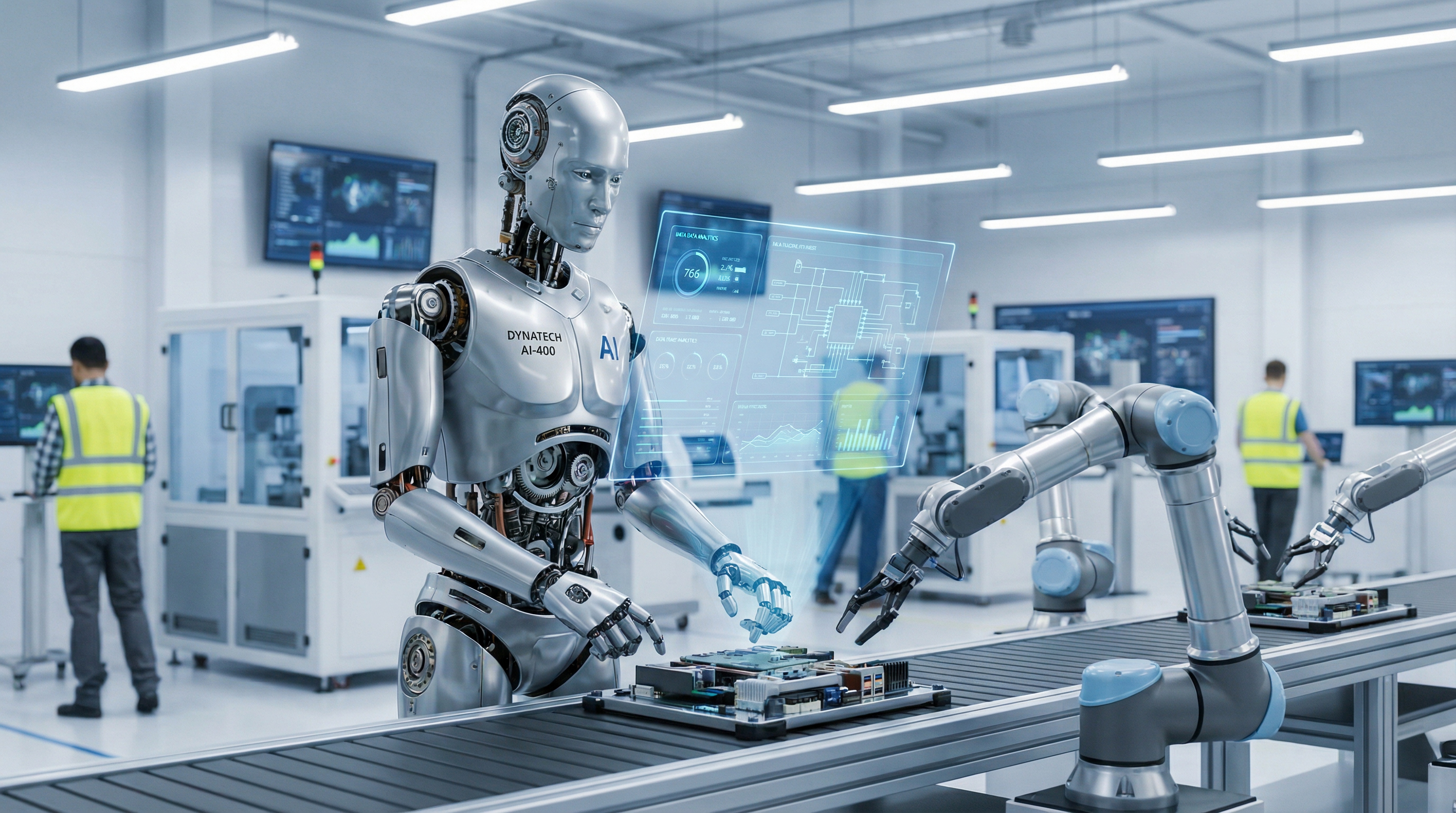
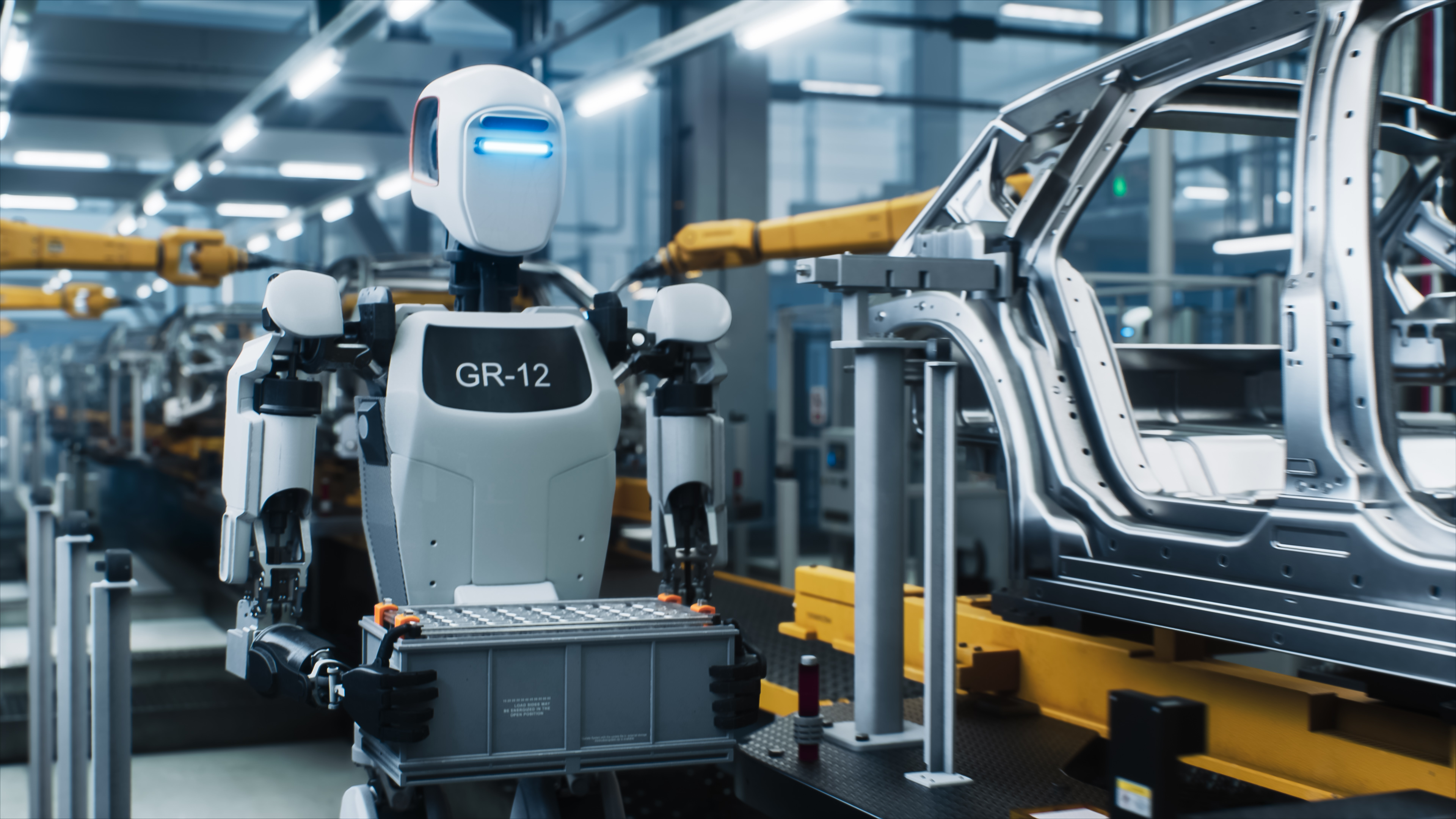

.jpeg)

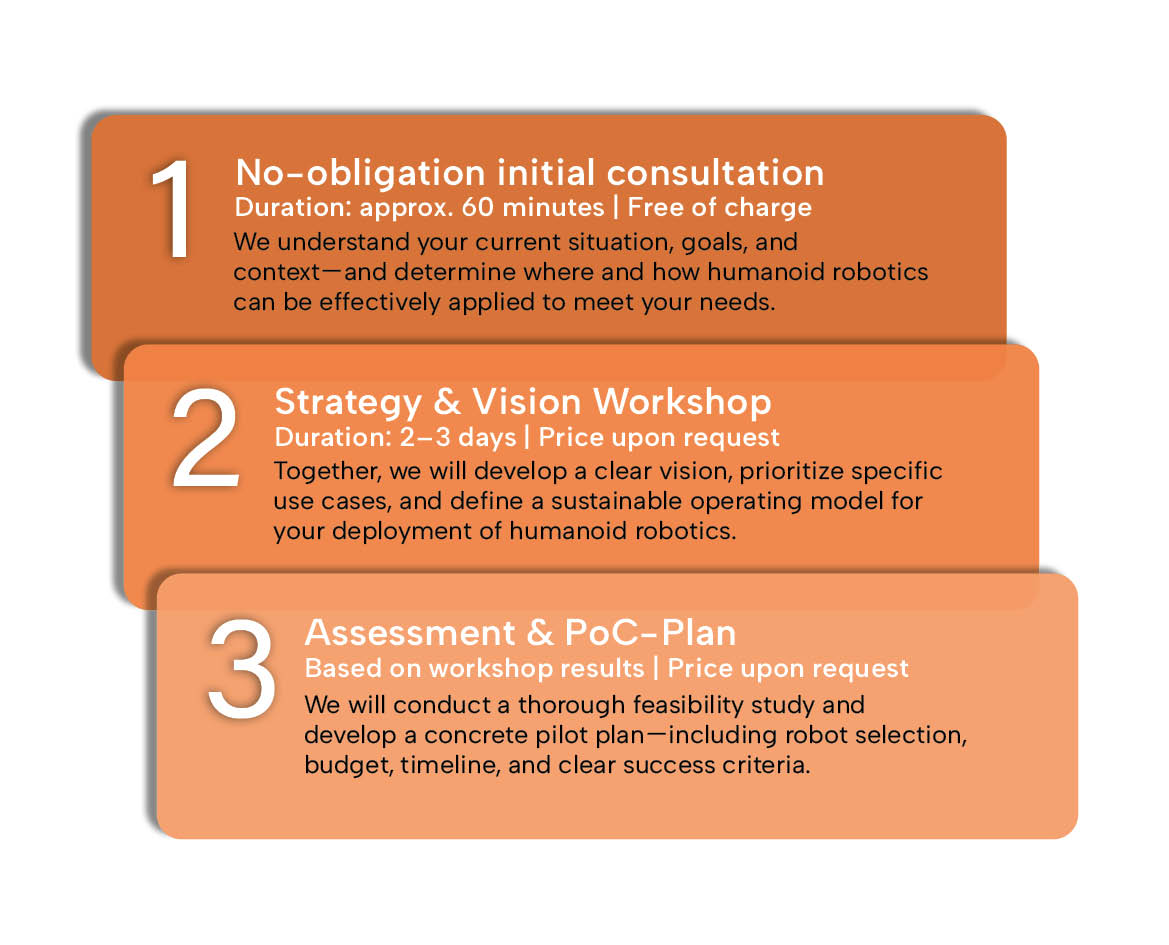
Let us start together
Structured, transparent, and quick to deliver initial results
Whether you’re evaluating initial opportunities or already exploring specific use cases—we’ll guide you every step of the way and support you exactly where you are today—with a clear focus on practical implementation and measurable value.